
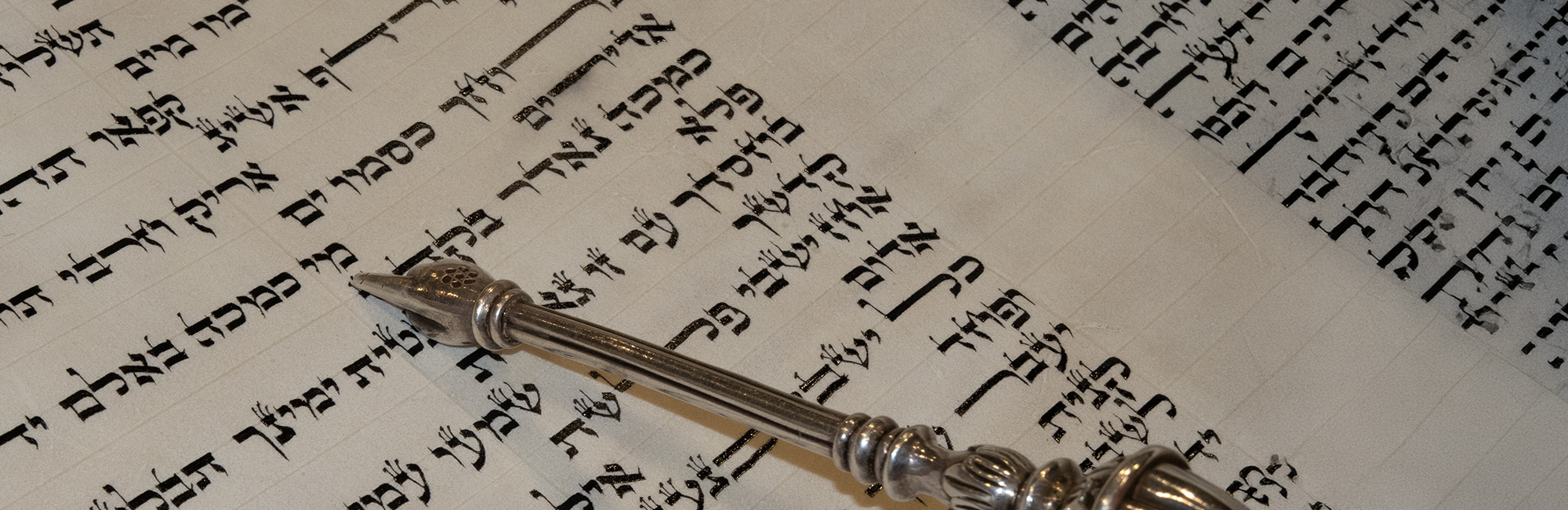
“To love ADONAI your God and to serve God with all your heart”
(Deut. 11:13)
“To serve God” Could this be prayer or does it really mean sacrifice? The verse goes on to say “with all your heart.” Sacrifice certainly demands nothing of the heart? So why does the verse mention the heart? It must mean to imply ‘prayer.’ (Sifrei to Ekev, 41)
Our Siddur
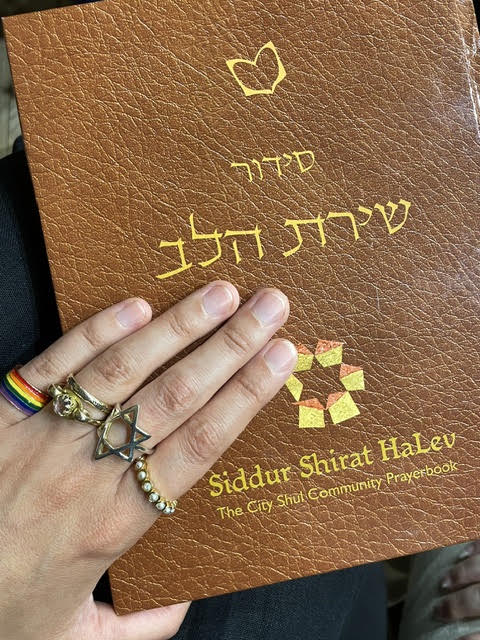
Siddur Shirat HaLev
The sacrifices described in the Torah serve as the model and inspiration for our prayer services and the siddur. The word Heart, (lev) is the key to understanding prayer. In the midrash above, the Rabbis ask, “how can we serve God with our hearts?” since we don’t need to use our heart to bring sacrifices. Their answer is, that prayer (in Hebrew, avodah she-balev), is the service of the heart. (The Hebrew word avodah in modern Hebrew means work, but in biblical and rabbinic texts, it refers to Divine service.) Shirat HaLev (Song of the Heart) is the name of City Shul’s new siddur.
The cover graphic is a siddur/book outline that contains the shape of a heart. This captures the creative tension between the content of the book (keva: the words from tradition and included newer texts) and our individual and communal spirituality that we bring to the worship experience (called kavannah: the inner devotion). Our siddur is never finished, as we continually bring novel insights and new understandings each time we open the book and each time the book opens our hearts.
Made by this community
The story behind Shirat HaLev
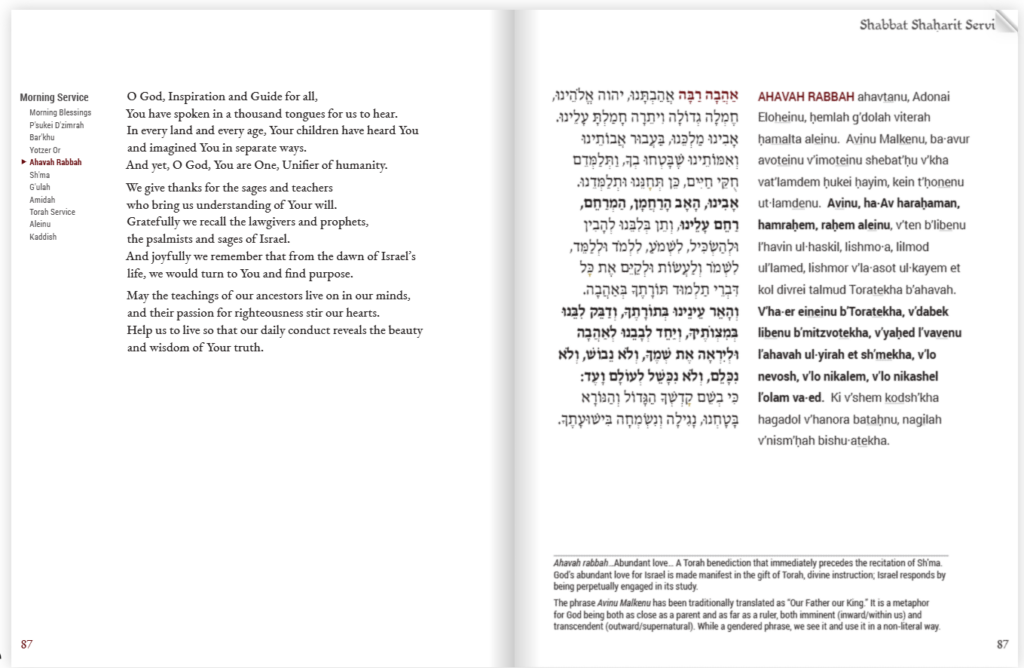
Shirat HaLev was created by City Shul’s community, for City Shul’s community. More than 100 congregants helped shape a siddur that reflects our particular traditions, voices, and way of praying.
The Ontario Jewish Archives has added Shirat HaLev to its collection, recognizing it as a distinctive record of Jewish life in Toronto.
Listen
Mah Tovu
Mah Tovu opens the Shabbat morning service. Click play to hear Hazzanit Tara Abrams sing Danny Maseng’s version:
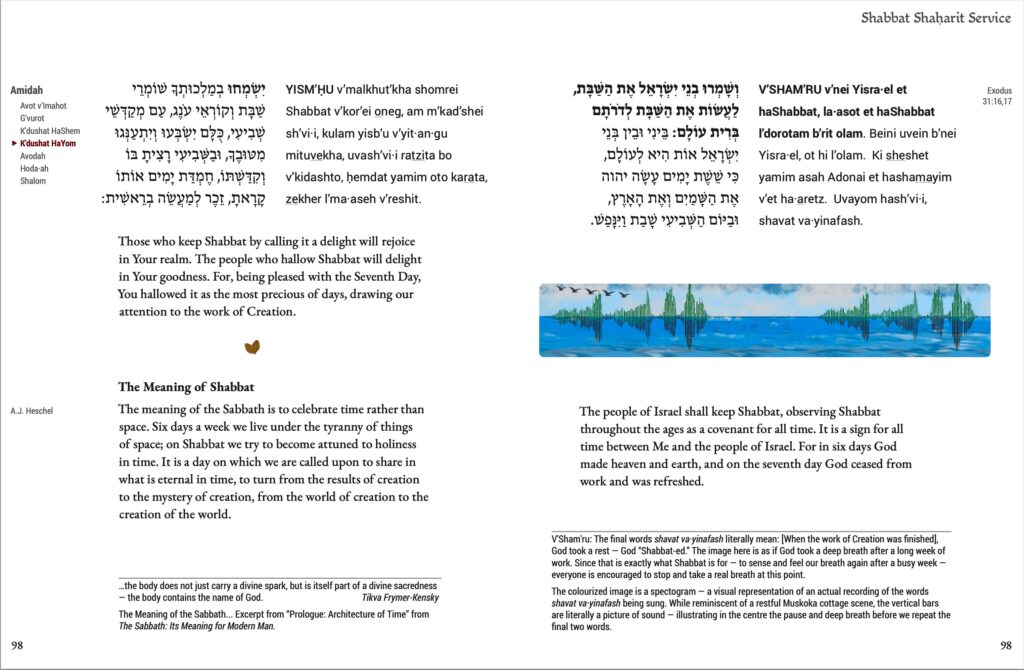
This sample page from the Shabbat morning service includes a graphic that illustrates the pause we take when we sing the words “Shavat…. Vayinafash.”
From the collection
The historical title pages
The City Shul Siddur: Shirat HaLev opens with a title page—a collage of historical title pages from prayerbooks in multiple languages (Arabic, Ladino, Spanish, German, and of course, English) from around the world, including the earliest Reform prayerbooks. The twelve panels recall the gems of the breastpiece of the High Priest that represented the twelve tribes. The quilt-like design seems fitting to open the siddur, as the siddur can be imagined as a patchwork of texts—biblical, talmudic, medieval, and modern, all lovingly sewn together over the centuries. Our unique siddur is now a new addition to the ever-growing library of Jewish prayerbooks.
We have reproduced the historical title pages here, with a short description of each book.
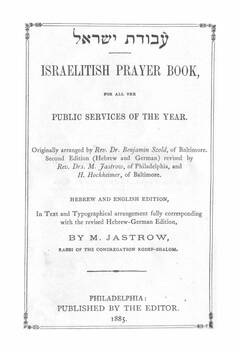
The siddur, Aḥodath Yisrael was first prepared for Temple Oheb Shalom (Baltimore, Maryland) by Rabbi Benjamin Szold (1829-1902).
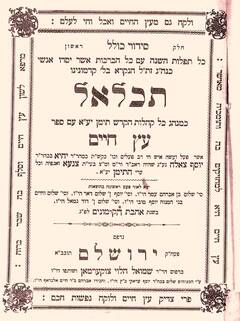
The front-page of a Yemenite Baladi-rite Siddur, printed in Jerusalem in 1899 by Avraham Al-Naddaf
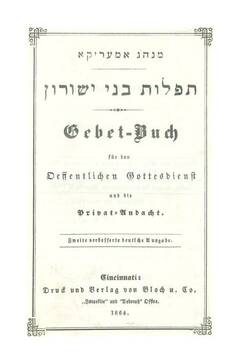
A siddur in Hebrew with German translation compiled by Rabbi Isaac Mayer Wise for Liberal/Reform congregations establishing a Minhag Ameriḵa.
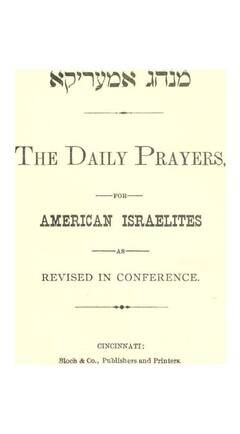
A siddur in Hebrew with English translation compiled by Rabbi Isaac Mayer Wise for Liberal/Reform congregations establishing a Minhag America.
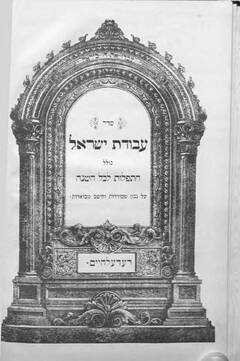
Seder Avodat Yisrael (Isaac Seligman Baer, 1868), a critical text of the nusaḥ Ashkenaz.
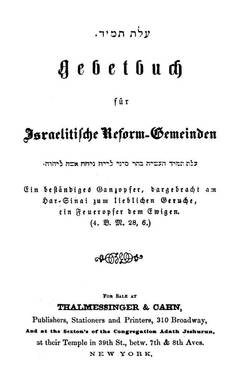
Olat Tamid by Rev. Dr. David Einhorn (1809-1878), in its German-Hebrew edition (1858) (see below)
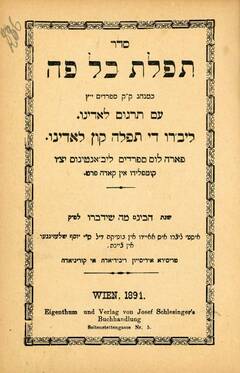
A bilingual Hebrew-Ladino Sefaradi siddur from the Ottoman Empire.
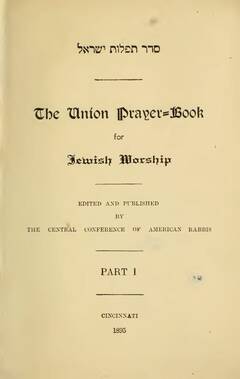
The first edition of the Union Prayer Book, the official prayerbook of the Reform Movement in the US.
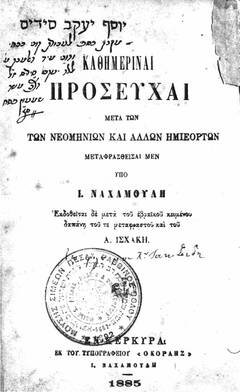
Index page of a Greek-Hebrew kol bo siddur, nusaḥ sefaradi (minhag Corfu) (Yosef Naḥmuli 1885)
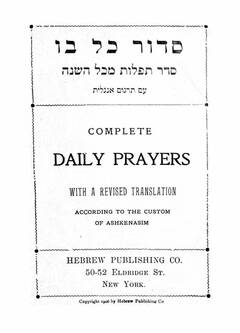
The first bilingual Hebrew-English “kol bo” (comprehensive) prayerbook published by the Hebrew Publishing Company in 1906.
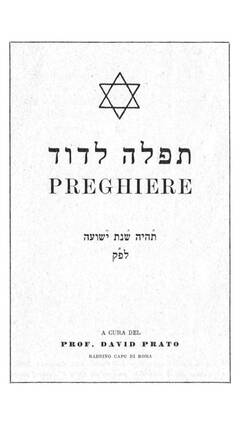
A bilingual Hebrew-Italian prayerbook compiled by the chief Rabbi of Rome according to the Nusaḥ Italḵi.
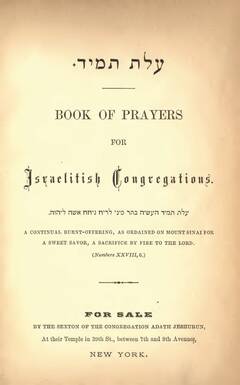
Rabbi David Einhorn’s (1809- 1878) prayer book `Olat Tamid (lit. the perpetual sacrifice) first penned in Germany, served as the model for the Reform Movement’s Union Prayer Book.
Thanks to the OpenSiddur Project for the images and descriptions.